
< Back to conference main page
Each workshop is an intensive, 4-day experience. Please select only one workshop when you register.
The images shown represent the work of the instructors and are not necessarily what will be created in the workshop. Please read the appropriate “detailed workshop information and tool list” for details.
Please check back soon for more information regarding the 2027 NBO Conference, Tradition and Innovation in Basketry 13, including details on how to register for when Registration opens September 1.
We look forward to seeing you in Shepherdstown next June!
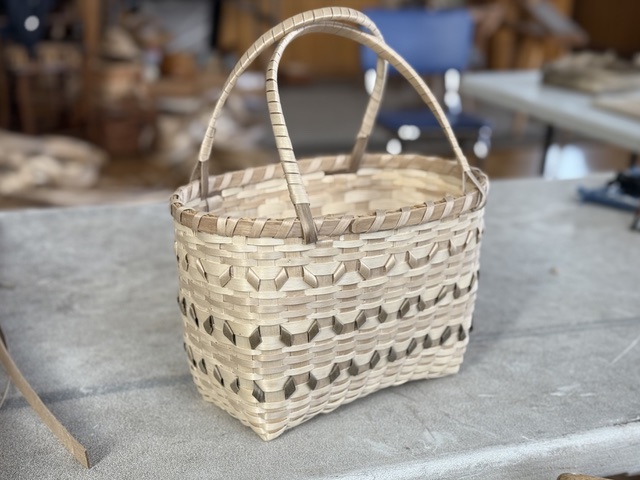
The Black Ash Handbag Basket
Instructor: April Stone
Black ash, also known as “Baapaagimaak” to the Ojibwe people around the shores of Lake Superior, is a native tree that provides beautiful, natural weaving material upon harvest and process of log to splint. Flexible to work with, Black Ash splint lends itself to a variety of basket shapes and sizes most suitable for fancy or utilitarian use.
Using scissors or slitting gauge and knife, participants will cut their pre-harvested and pre-shrunk, choice Ash splint into the working base, upright, weavers, handles, lashing and rim pieces. The base will be an optional plain weave or twill weave while the height of this basket is woven one round at a time, allowing creative play with weaver widths. Time permitting, participants will be able to make their own basswood cordage for filler in the rim system. Hand strength is required for this kind of basket work and must be comfortable using a knife.
With time and use, this basket will develop a beautiful patina.
Materials Fee: $150
Click here for more detailed workshop information and tool list
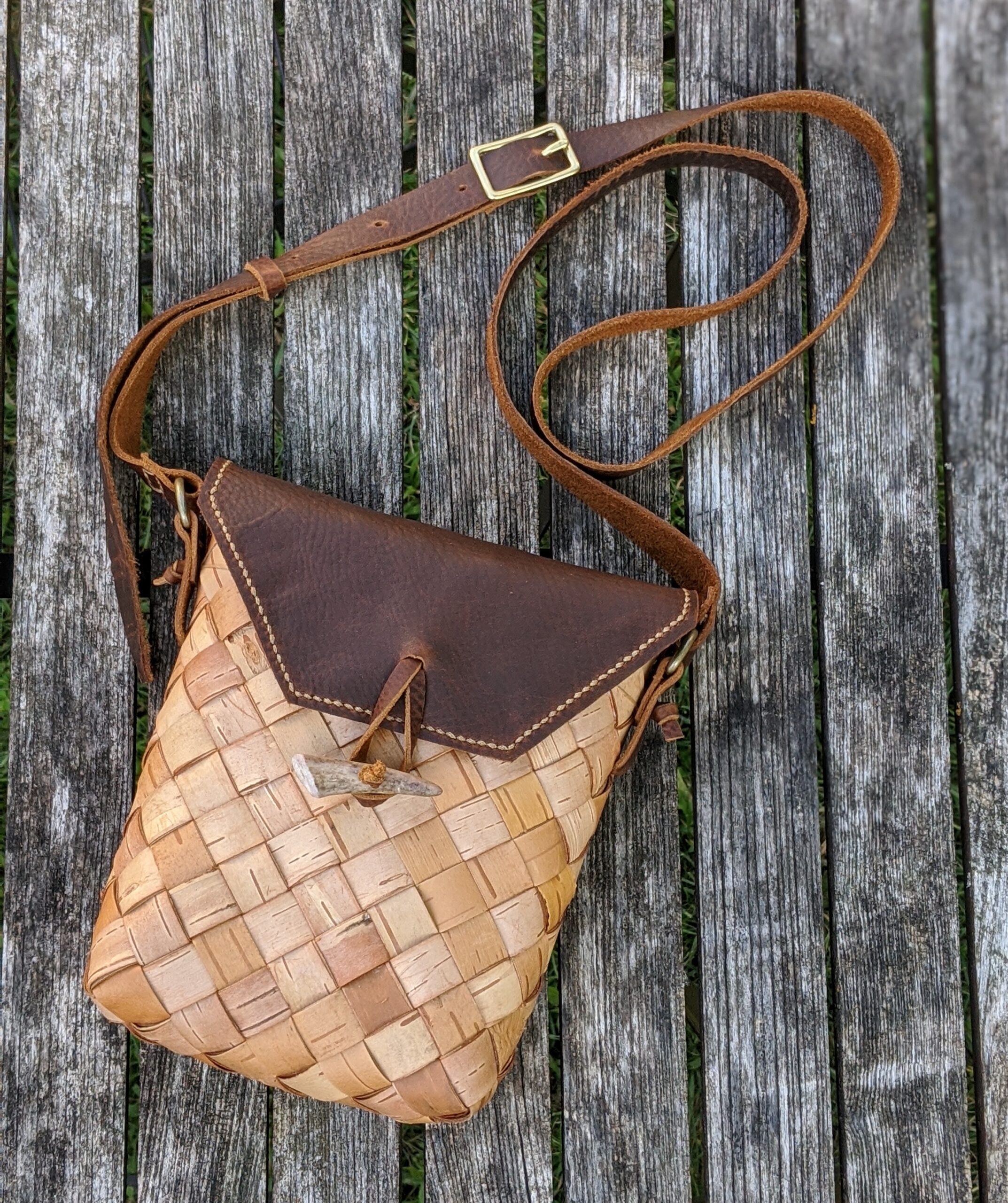
Birch Bark Woven Bag/Pack
Instructor: Beth Homa Kraus
Explore birch bark weaving and leatherwork in this extended class that allows students the full process to
complete a side sling bag or baby backpack. Students will be introduced to the history and ecology of birch
trees and discuss mindful harvesting practices while processing birch bark. Become intimate with the bark by
cutting, splitting and grading raw bark in preparation for weaving. Using a double diagonal plaited weave
pattern up and back down to create a sturdy yet flexible base. Students will prepare and attach a leather flap,
straps, buckles and closure using a saddle stitch to make the finishing touches. This class requires strong finger dexterity and strength. Some have found it more challenging than expected, but no prior weaving experience is required. Because the material requires the weaver to adapt to the material that the tree provides, there is no pattern.
Materials Fee: $150 (side sling) or $200 (small/baby backpack)
CONSIDER ALLERGIES: a mixture of beeswax & walnut oil is used in this process – if you have certain nut or bee allergies please be advised.
Click here for more detailed workshop information and tool list
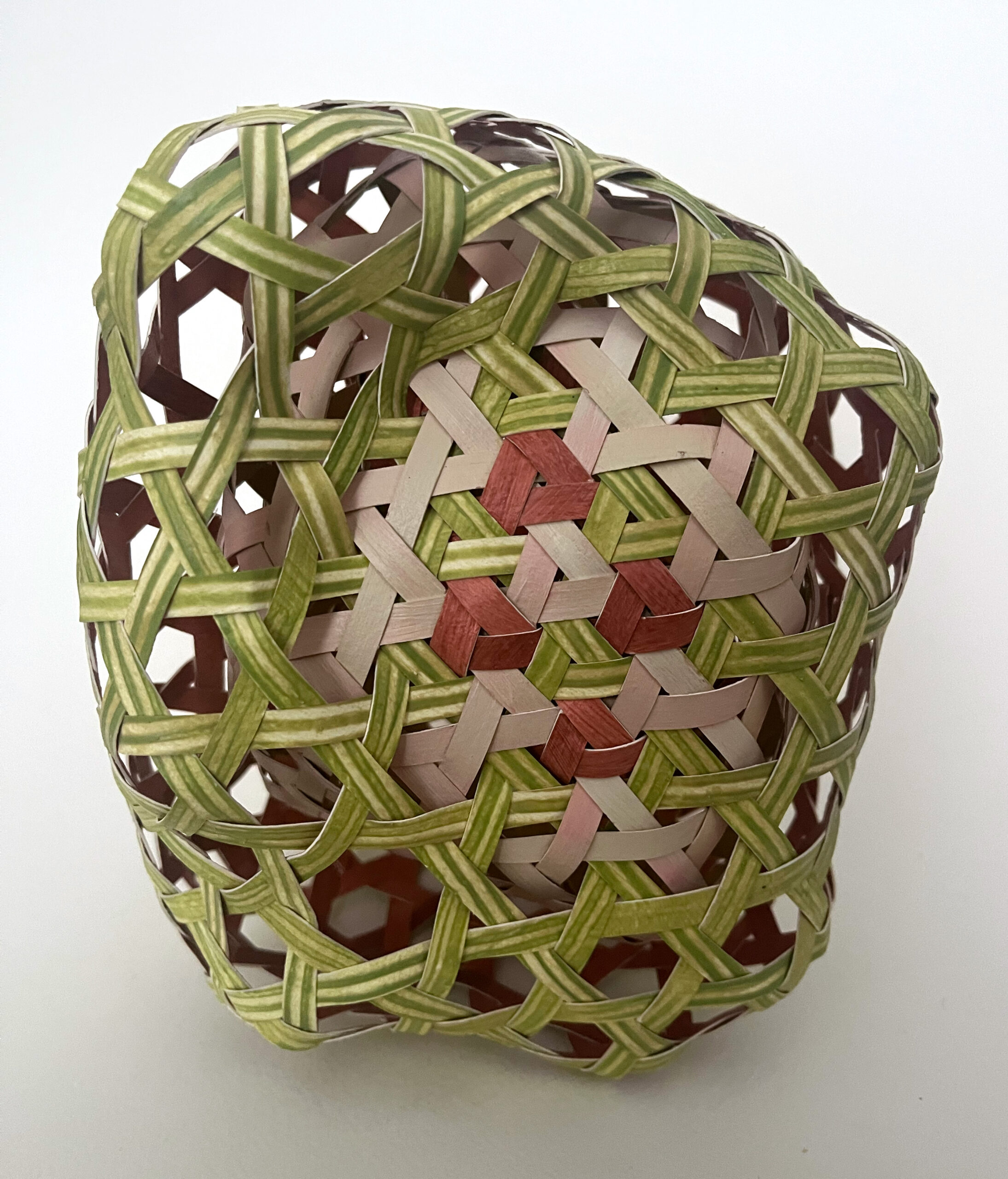
Triaxial Weaving: Exploring the Hexagon & Mad Weave
Instructor: Bethany McGann-Strohm
In this class, participants will explore the geometry of triaxial weaving with both rattan reed and painted polyester. Students will learn 2 different forms of triaxial weaving—the open hexagonal weave and the mad weave—and how these two types of weaves are connected. They will learn how to weave both of these types of weaves as a fabric and how to turn corners to create both functional baskets and sculptural forms. Students will leave having created 3-4 finished works, including several personal projects that explore techniques, materials and shapes. While not essential, an understanding of how to turn corners with plaiting will be helpful.
Materials Fee: $50
Click here for more detailed workshop information and tool list
Two Traditions, One Basket: White Oak and Brown Ash Basketry
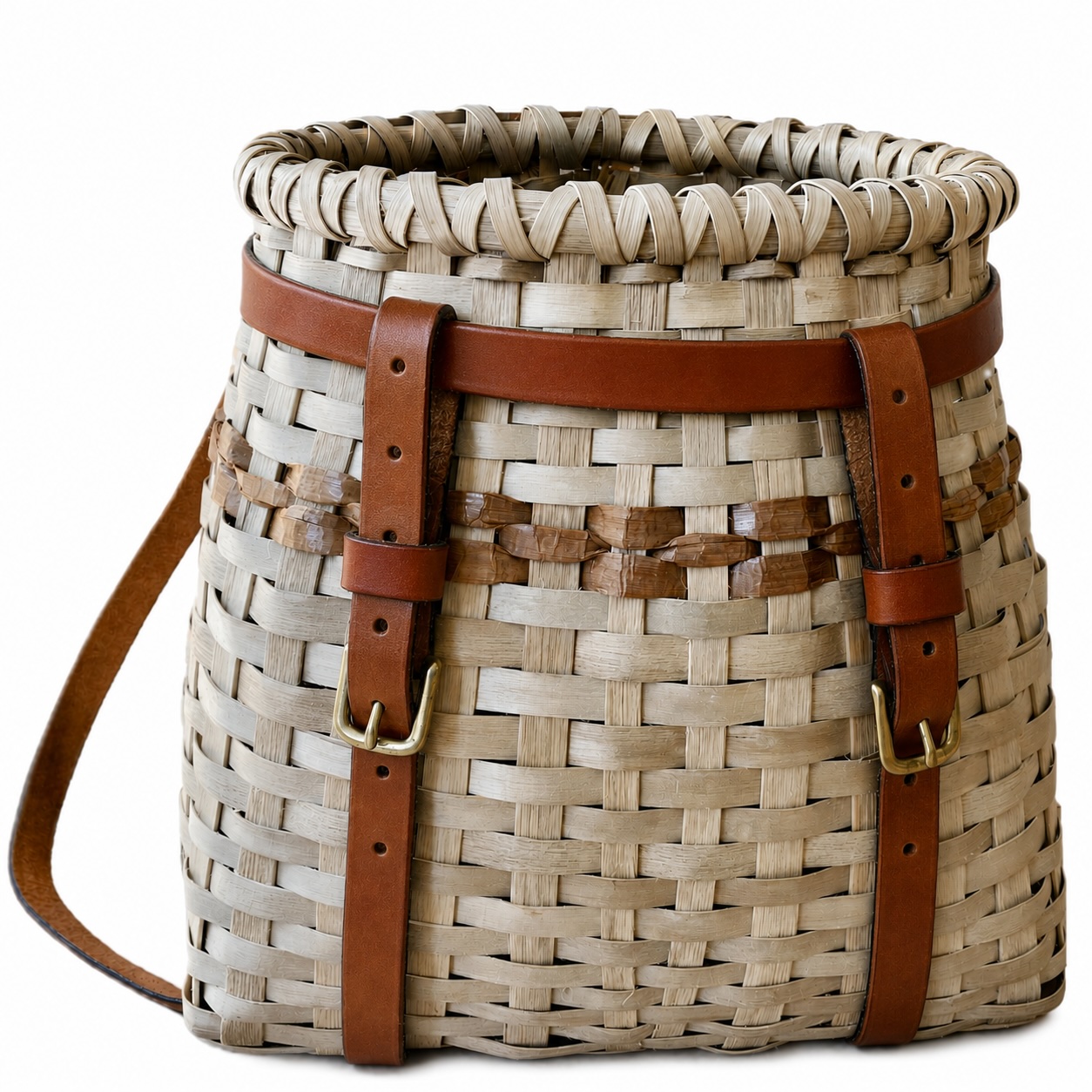
Instructors: Billy Ray Sims and Micah Wiles
The workshop brings together the experience of Billy Ray Sims and Micah Wiles, representing two generations of basket makers dedicated to preserving and advancing split-wood basketry traditions. Sims is an accomplished basket maker, teacher, and former magazine editor whose work is included in museum collections, including the Smithsonian and Museum of Appalachia. For more than 30 years, Sims, who lives in Maine, has explored traditional split wood basketry while also collaborating on large-scale sculptural works from natural materials. Wiles is a highly regarded young white oak basket maker from Kentucky whose work is rooted in Appalachian traditions. He teaches basketry throughout the region and recently returned from a cultural exchange program in Japan, where he studied traditional craft practices and woodworking traditions.
White oak and brown ash processing methods will be demonstrated, and students will complete the final stages of preparing selected materials before weaving. Prepared billets, weaving materials, and accent materials will be provided, allowing participants to focus on basket construction, shaping, and design. Discussion will include material selection, basket design, shaping techniques, rim and handle construction, and methods for incorporating decorative accents.
By the end of the workshop, each student will leave with a completed basket, material samples, processing knowledge, and a deeper appreciation for the rich traditions and continuing evolution of split-wood basketry. This workshop is best suited for students who have completed at least one basket and are comfortable with basic over-under weaving techniques. Handling the tools and materials requires good hand strength. The class moves beyond introductory basketry and focuses on shaping, material preparation, design decisions, and the incorporation of natural accents into a finished basket.
Materials Fee: $250
Click here for more detailed workshop information and tool list
Animal Sculptures with Roots in Basketry
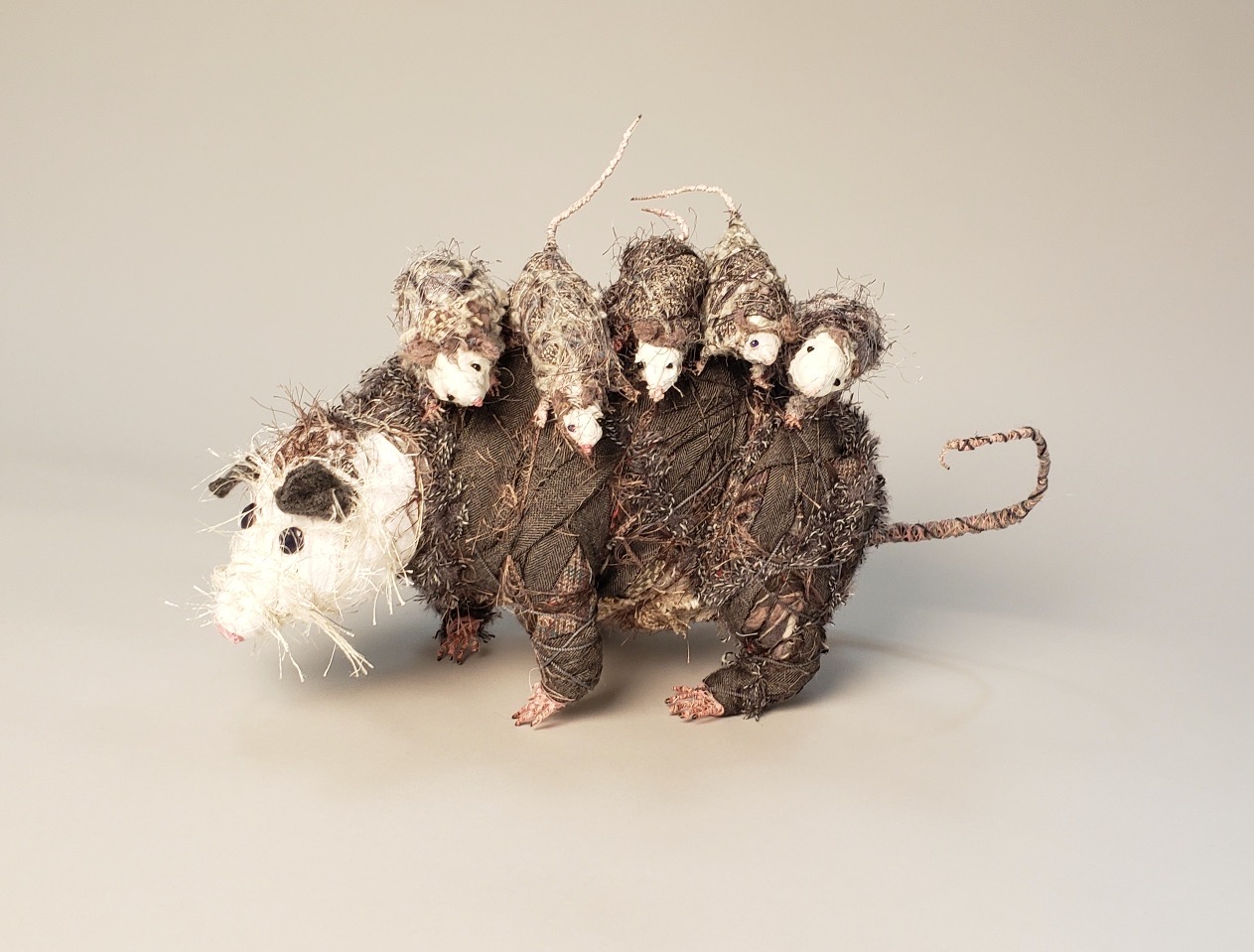
Instructor: Bryant Holsenbeck
This class will use bits of fabric, bags of yarn, and other items that you have been saving for a rainy day to make animal sculptures! Using basketry techniques of coiling, wrapping, and random weave, plus a bit of stuffing, sewing and binding when needed, we will make animals and birds out of wire, recycled textiles and other scavenged materials. We will begin by learning basic armature forming techniques to create skeletons that allow the animals and birds to come to life. By studying the detail and articulation of your chosen animals, learn how to incorporate both heavier and finer wire to give more detail. Wrapping, stuffing, binding and sewing will complete the animals. We will begin with creatures that walk or crawl, and end the week with ones that fly.
All students are encouraged to bring printed images of the animals and birds they are interested in making. Open to all levels.
Materials Fee: $35
Click here for more detailed workshop information and tool list
Elm Bark and Sweetgrass Baskets
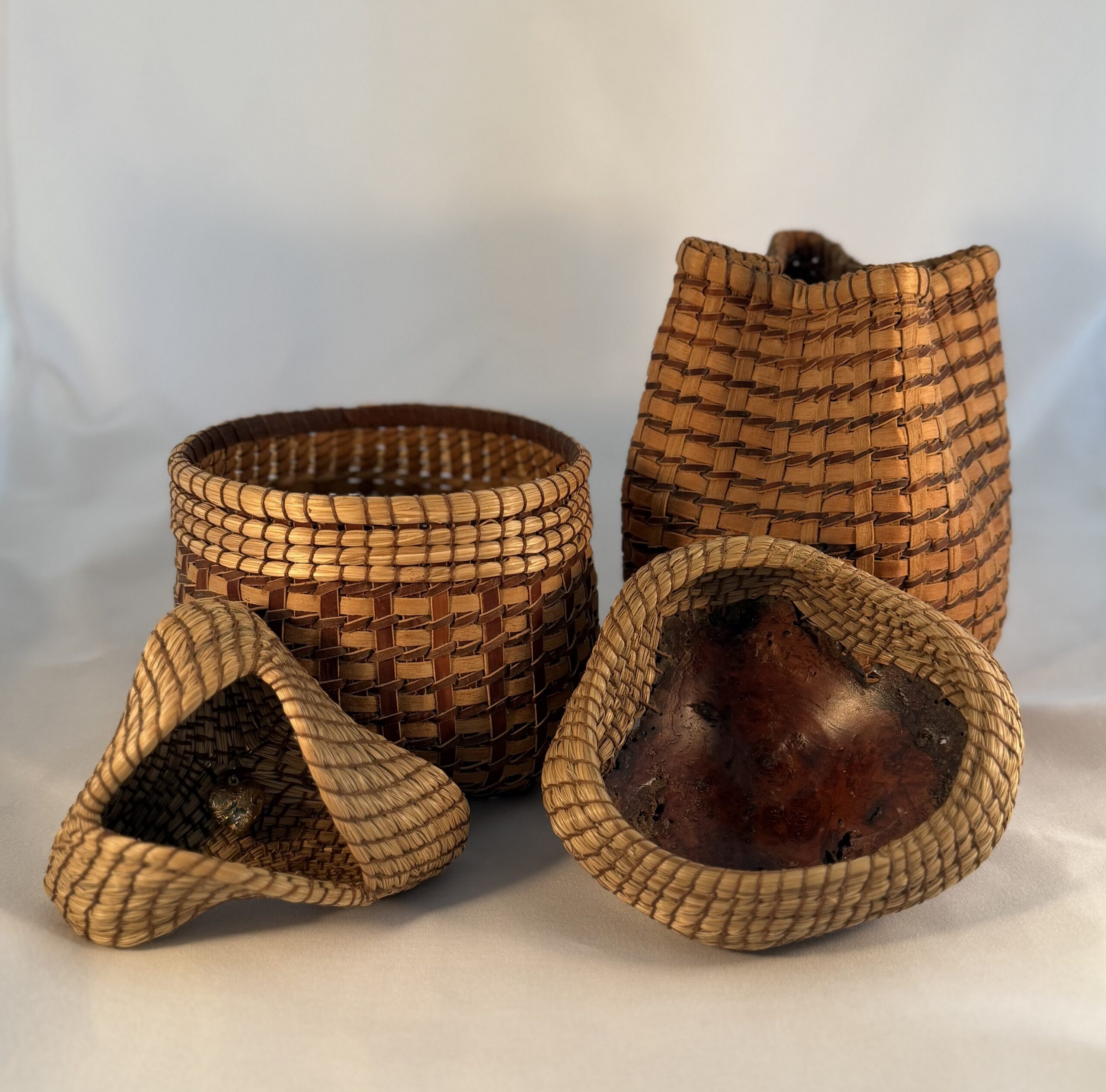
Instructor: Dianne Stanton
Explore the interplay of form, material and the method of making baskets with elm bark and sweetgrass. Start by learning to clean, divide and cut elm bark from harvested strips, while discussing the harvest and preparation of both sweet grass and elm bark. Using the bark that you have prepared, the basket starts with a simple twill base and moves up the sides using a Native American technique called “between-weave twining”. The finishing technique of adding a collar will be done with a choice of t-twining several rows of fragrant sweetgrass or an elm bark rim.
Additionally, a second basket using sweetgrass can be created, using coiling techniques incorporating purchased or found pieces of wood and stitched with waxed linen. Open to all levels.
Materials Fee: $155
Click here for more detailed workshop information and tool list
Black Willow Bark on the Bias
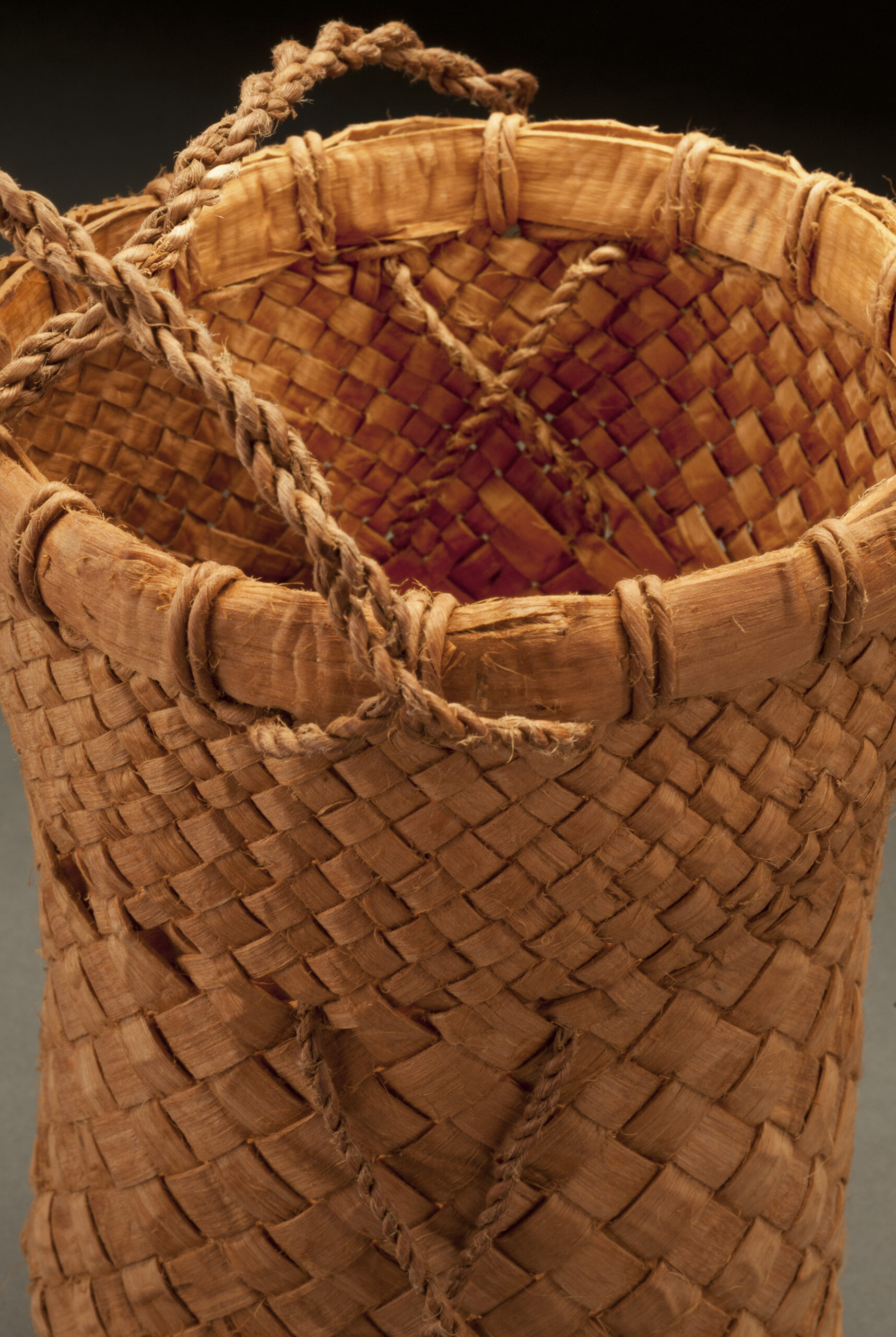
Instructor: Jennifer Zurick
This class will introduce weavers to native black willow bark, a very strong, flexible and beautiful fiber uncommonly used for basketry. Students will work with the inner bark, weaving spokes on the diagonal split from a simple “pinwheel” constructed base. The fineness of the weave students wish to attain will be based on individual choice and may be creatively designed as the basket progresses. A simple rim band with lashing or woven rim technique will complete the basket and cordage may be spun into a handle or applied for decorative embellishment. Hand strength is desirable.
Materials Fee: $190
Click here for more detailed workshop information and tool list
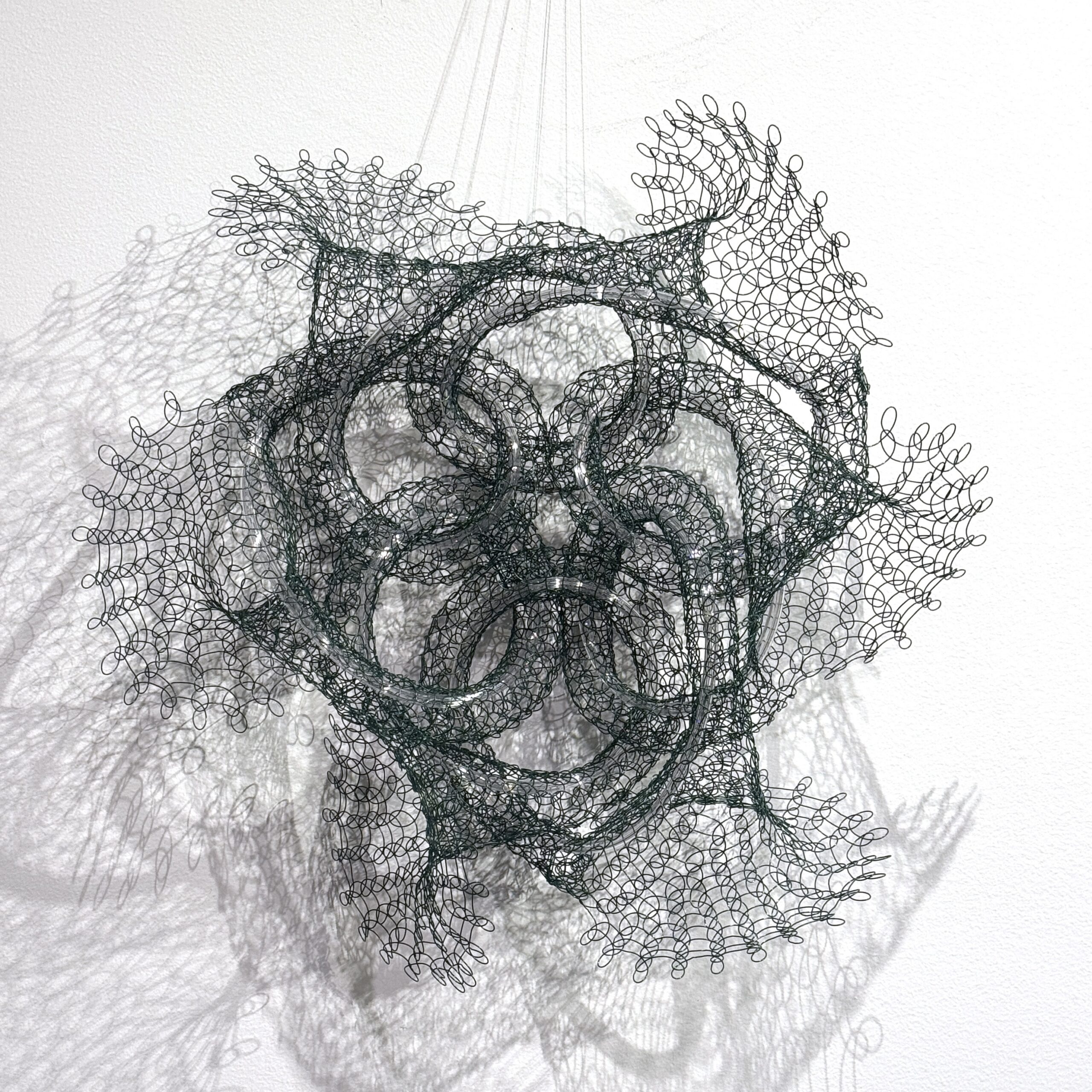
Ruth Asawa and Beyond – Continuous Looping With Wire
Instructor: Jessica Beels
The workshop will explore the wire looping technique that Ruth Asawa learned in Mexico and used for her iconic sculptures. The purpose of this workshop is not to recreate Asawa’s work, but rather to use what we can learn from her forms to extrapolate in new directions and push elements of the technique toward our own personal expressions.
A version of knotless netting or continuous looping, it starts with wrapping soft wire (e.g., annealed steel or copper) around a dowel to create loops that are then tucked into each other. This workshop will teach how to use this technique to make simple vessels and enclosed shapes as well as how to create intersecting structures and use increases and decreases to produce more complicated undulating and hyperbolic surfaces. Students will be able to complete at least a few small vessels or enclosed structures, with the option of larger and more complex forms depending on skill level and interest. The class will discuss how to create a larger collaborative form for the final conference show.
Hand strength and dexterity is helpful to try the full range of forms and materials discussed, but students will have simpler options through which they can learn the concepts and still have ample experimental range. Familiarity with working with wire and hand tools (jewelry pliers and wire cutters) a definite plus, but not required.
Materials Fee: $75
Click here for more detailed workshop information and tool list
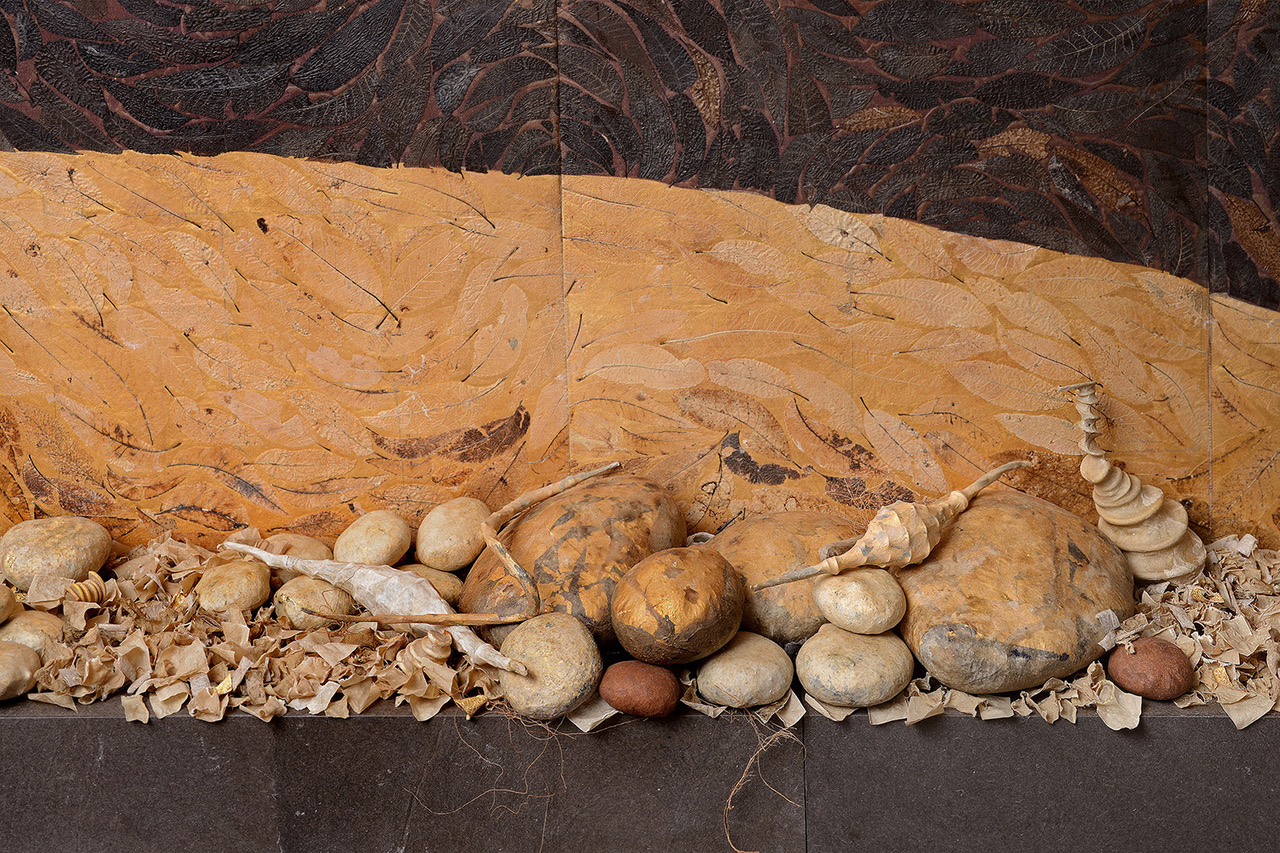
Sticks and Skins
Instructor: Jo Stealey
Basketry techniques are the foundation for many sculptural works. This workshop will explore how twining and lashing in a variety of ways with reed, can be utilized to create unusual shaped armatures for sculptural vessels. The armatures will be covered with a skin of paper or cloth to create three-dimensional canvases. The forms will be finished with surface techniques such as mark making, collage, drawing, painting, more layers of paper, and /or stitching. The emphasis for the week will be on individual creativity. Some weaving experience helpful but not necessary.
Materials Fee: $40-$50
Click here for more detailed workshop information and tool list
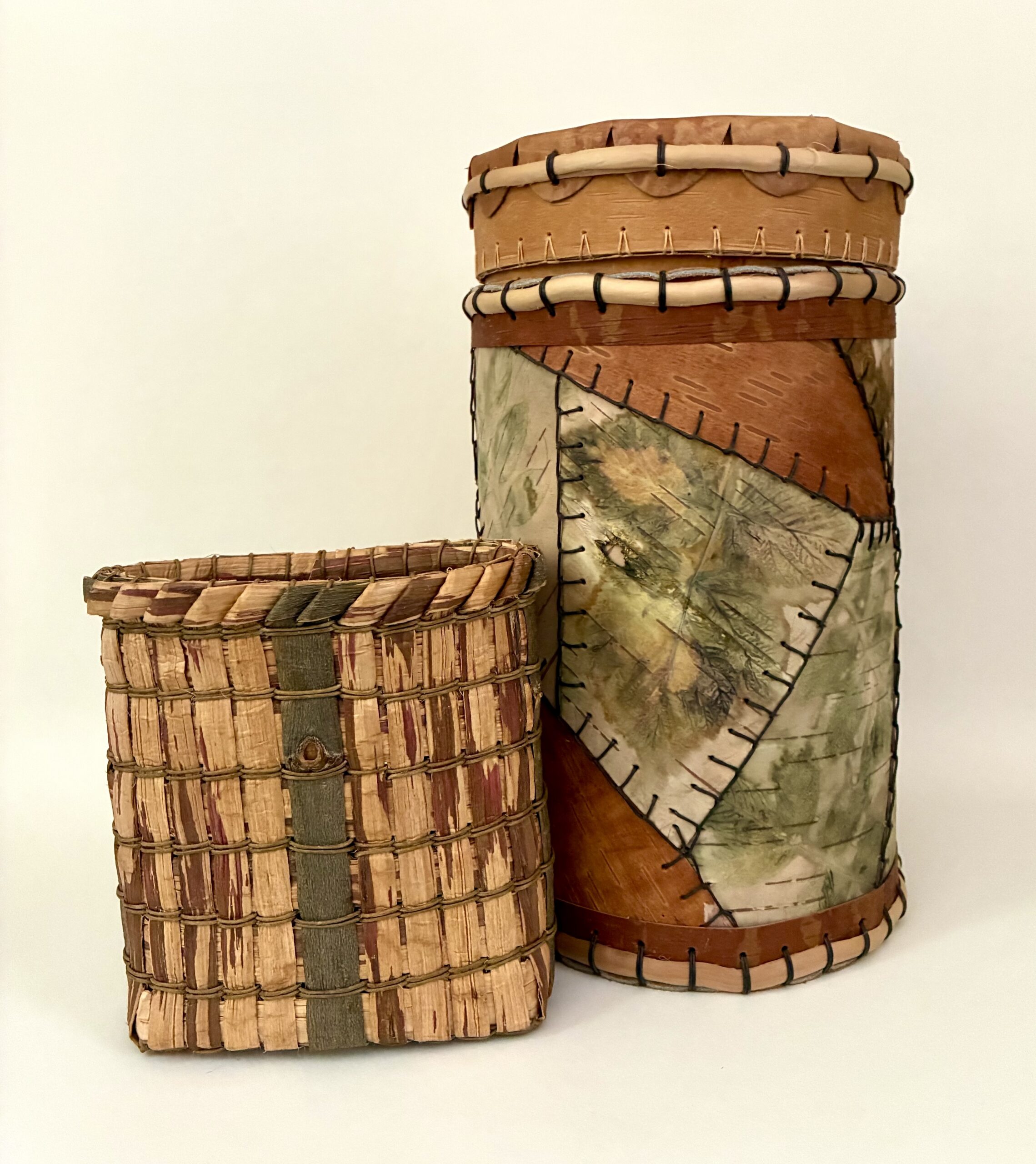
Triple Wall x 2
Instructor: Karen Tembruell
We will explore two different triple wall techniques using teacher harvested and prepared barks. Class will begin with a session of botanical printing with leaves on birch bark. While the prints are steaming, a Pacific Northwest triple-wall technique will be taught with finely split cedar bark and willow bark, and measures approx. 4 1/2” x 2 1/2” x 5” tall. This technique utilizes sandwiched weavers and waxed cotton cord twining with a folded rim. Day 2 – we will begin the large triple-wall birch canister featuring an outer layer of the botanical printed birch in a patchwork design secured with simple embroidery stitching. This lidded canister is my version of a northern birch culture container. The base is pine, and the construction is stitched fabrication with waxed cotton cord. Spruce root rims will be used with leather rim fillers. The construction includes a dovetail type side join and is fully lined for a clean interior finish. The canister measures approx. 5 1/2” x 5 1/2” x 9 1/4” tall.
Students should be able to twine. Hand strength and dexterity is required (lots of stitching!). Patience and an open creative mind is appreciated and helpful . A focused work attitude is necessary to complete the projects.
Materials Fee: $285
Click here for more detailed workshop information and tool list
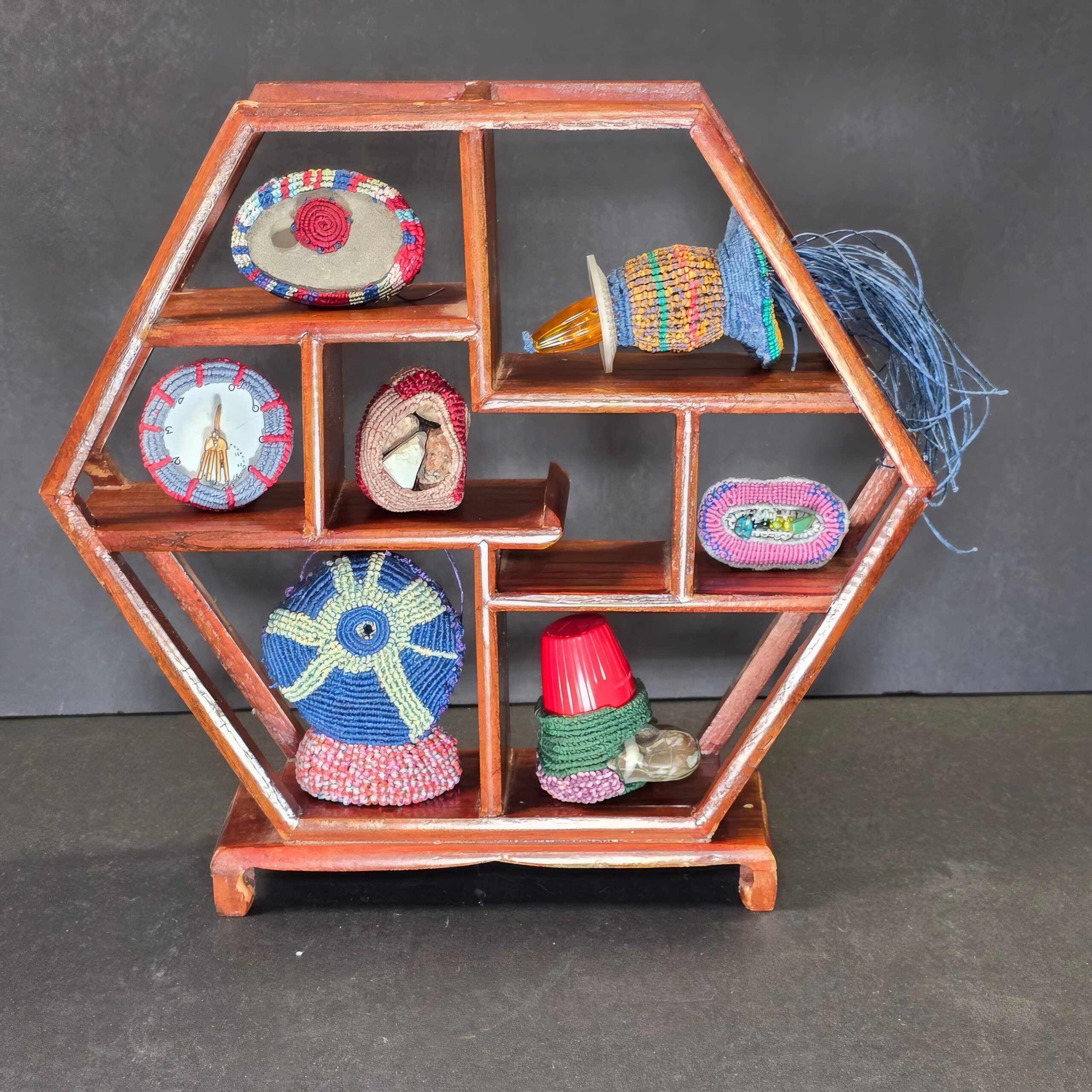
Knot Now, Knot Here, Knot Forever
Instructor: Norman Sherfield
Four non-stop days of knotting fun. Beginners will start with covering a 4” diameter foam ball. The class will teach the basics of waxed linen knotting. You will learn how to start a piece, how to add waxed linen, how to knot in different directions, how to end a project (what to do with all those leftover strings), basic knotting around a core, and how to knot over found objects.
Depending on how quickly you learn the knotting technique, you might be able to start a first project during the class but will not likely finish it. Knotting is a slow process. Students who have already done knotting and have a project they want to bring to get help figuring out the next steps are also welcome. Everyone will be shown more advance techniques, like knotting in a circle instead of a spiral and how to knot more randomly instead of doing the normal circles (around and around). You will also be shown how to put windows in your knotting so you can see part of the object and not cover it entirely with waxed linen. All levels welcome.
Materials Fee: $30
Click here for more detailed workshop information and tool list
Pine Needles – Functional Beauty
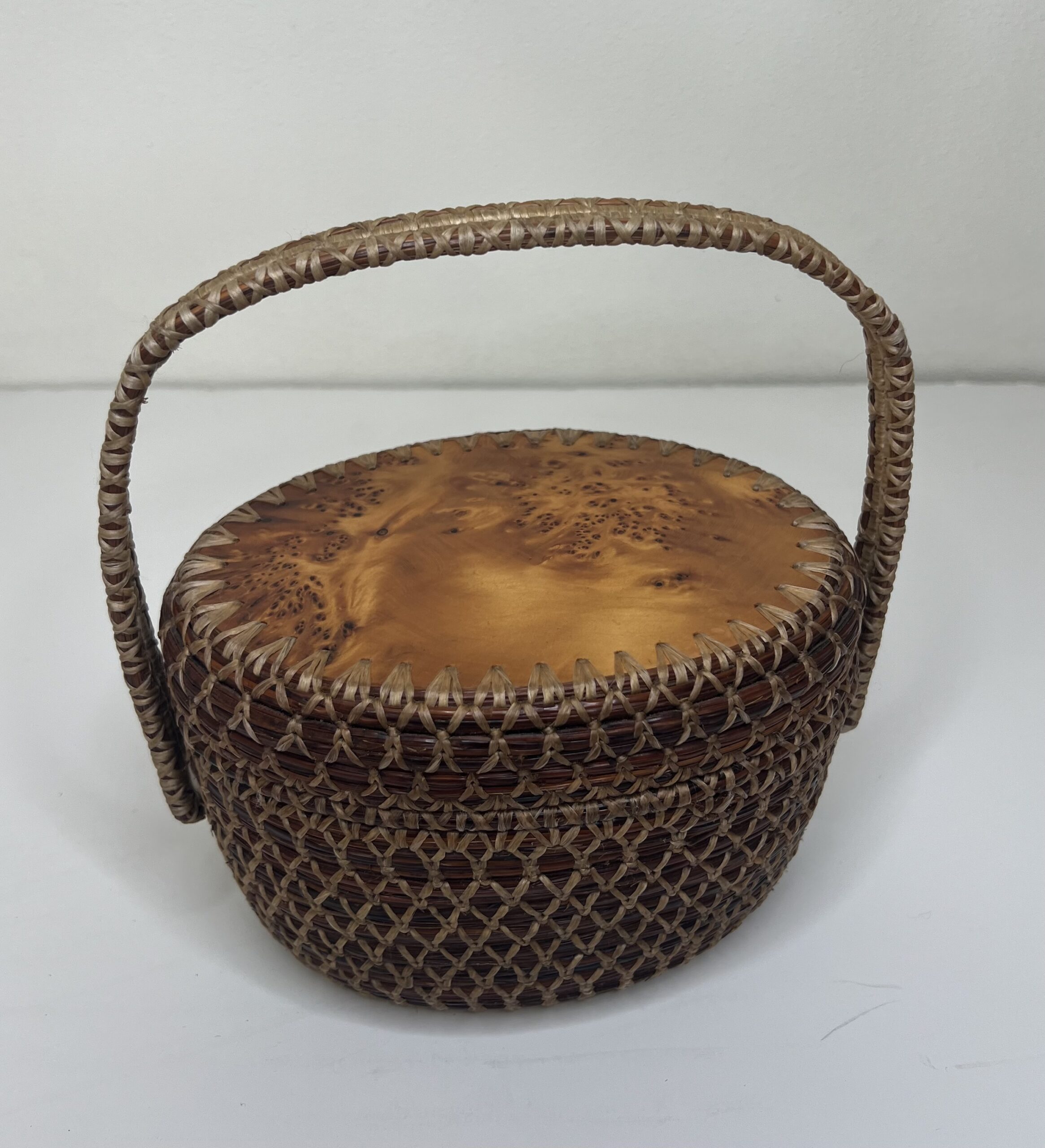
Instructor: Pamela Hermann
Students may choose to create a sampler canister for holding pine needles (lid may be added) or a lidded basket of their own design. Or both if time allows. Beautiful, footed hardwood bases will be options for starting the coiled baskets or for use in completing the lids. Students will be taught a large variety of stitches and stitch combinations to use in designing their basket. Instructions will be written, diagramed and hands on, and students may choose the stitches they wish to perfect to expand their knowledge for pine needle coiling. Shaping will be stressed for these baskets, using Glycerin treated long leaf pine needles and stitching with artificial sinew. A large variety of the instructors’ completed baskets will be on hand for inspiration! Students must be able to sew with needle and thread.
Materials Fee: $255
Click here for more detailed workshop information and tool list
Willow Frame Baskets with Braked Bark
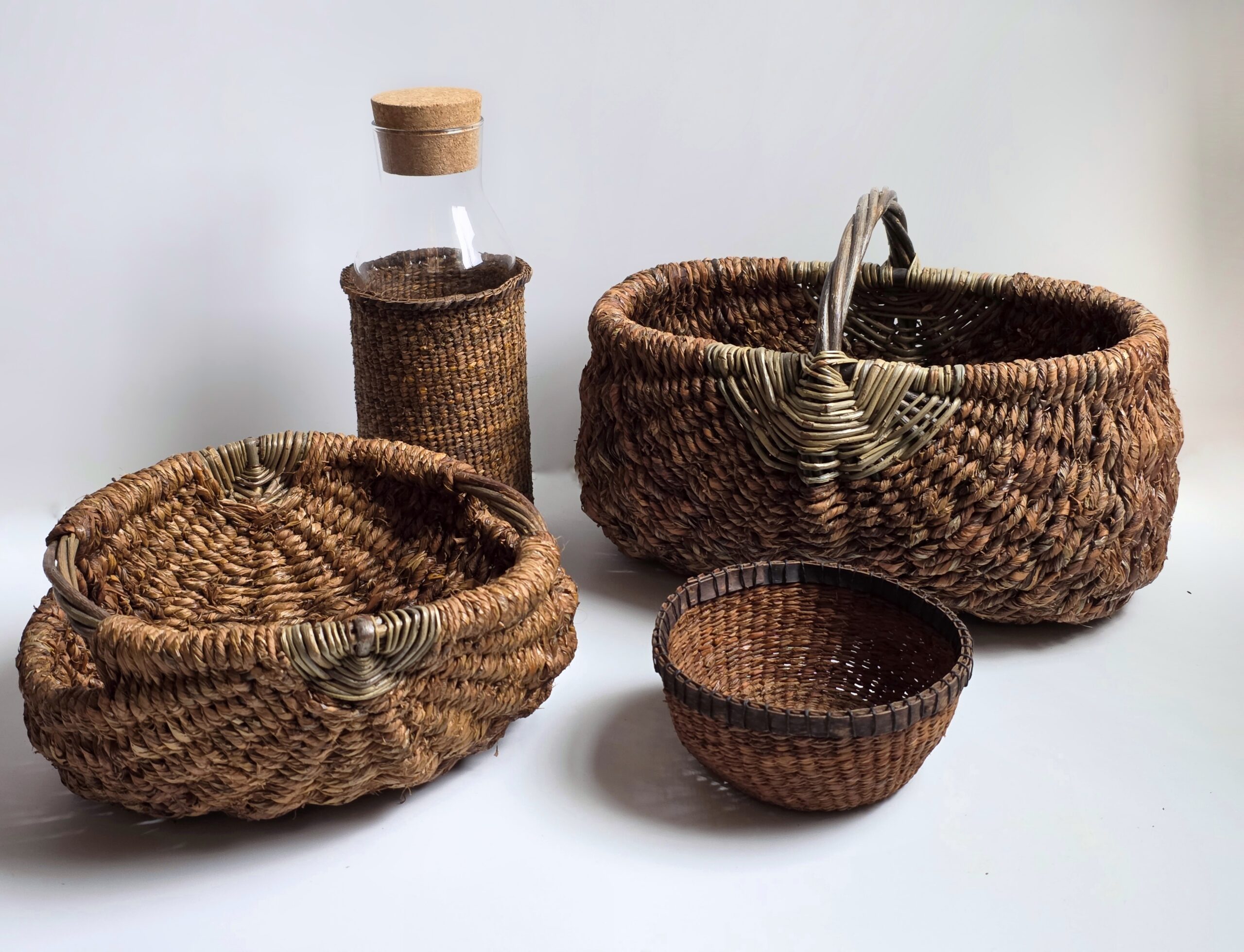
Instructor: Sandra Kehoe
Students will learn about the process of making white willow and utilizing the braked bark in a frame style basket. Processing white willow by hand using a brake is a laborious task that can only be accomplished in early Spring. Since braked bark is the by-product of processing white willow it typically gets overlooked or thrown away (such a shame). My goal is that that each student would make one large frame style basket (or two smaller size frame baskets) and if time allows work any of their remaining braked bark into a smaller twined bark basket to experiment with another application for this special material. Due to the perfect timing of the conference I will bring larger willow so students can learn how to strip larger willow bark (a fun bonus) and use this in their small twined basket. All levels are welcome. Good hand strength is advised.
Materials Fee: $150
Click here for more detailed workshop information and tool list
Tour Schedule
Tour Fee: $150
Wednesday, June 9, 2027
Come join us for a tour of both history and art in the Eastern Panhandle of West Virginia and beyond! The first day’s tour will take us to Antietam National Battlefield. After touring the museum, our bus will drive us to this immense battlefield’s critical points. Following will be a visit to the Antietam National Cemetery and ice cream at a local favorite- Nutter’s Ice Cream. On our way back to Shepherdstown, we’ll visit the National Park’s site for the C&O Canal and take a short scenic walk.
Antietam National Battlefield
Antietam National Cemetery
Nutter’s Ice Cream
Chesapeake & Ohio Canal National Historical Park: Williamsport Visitor’s Center
Thursday, June 10, 2027
Thursday’s trip will take us into Washington, DC, where we will spend our day on the Mall surrounded by Museums. We will visit several of them with Basket Collections. Details will be finalized soon.
Friday, June 11, 2027
Day three will take us to Harpers Ferry National Historic Park with a stop by a local favorite coffee shop- Black Dog Coffee. In Harper’s Ferry, the Potomac and Shenandoah Rivers meet and was called “perhaps one of the most stupendous scenes in Nature” by Thomas Jefferson. This was also the famous site of John Brown’s Raid prior to the Civil War. After lunch we’ll visit another part of the Historic Park- Storer College, which was the first in the state to open to all races and sexes, in operation from 1867-1955.
Black Dog Coffee
Harpers Ferry National Historical Park
Storer College
Saturday, June 12, 2027
Our final tour day will take us to the Museum of the Shenandoah Valley in Winchester, VA, for a more relaxed day. We will enjoy this small gem of a museum, see how baskets in the Shenandoah Valley were made, and explore the surrounding gardens. In the afternoon, on our way back to Shepherdstown, we will visit a few local artisan studios and see how their wares are made.