
Instructor: Bethany McGann-Strohm
Materials Fee: $50
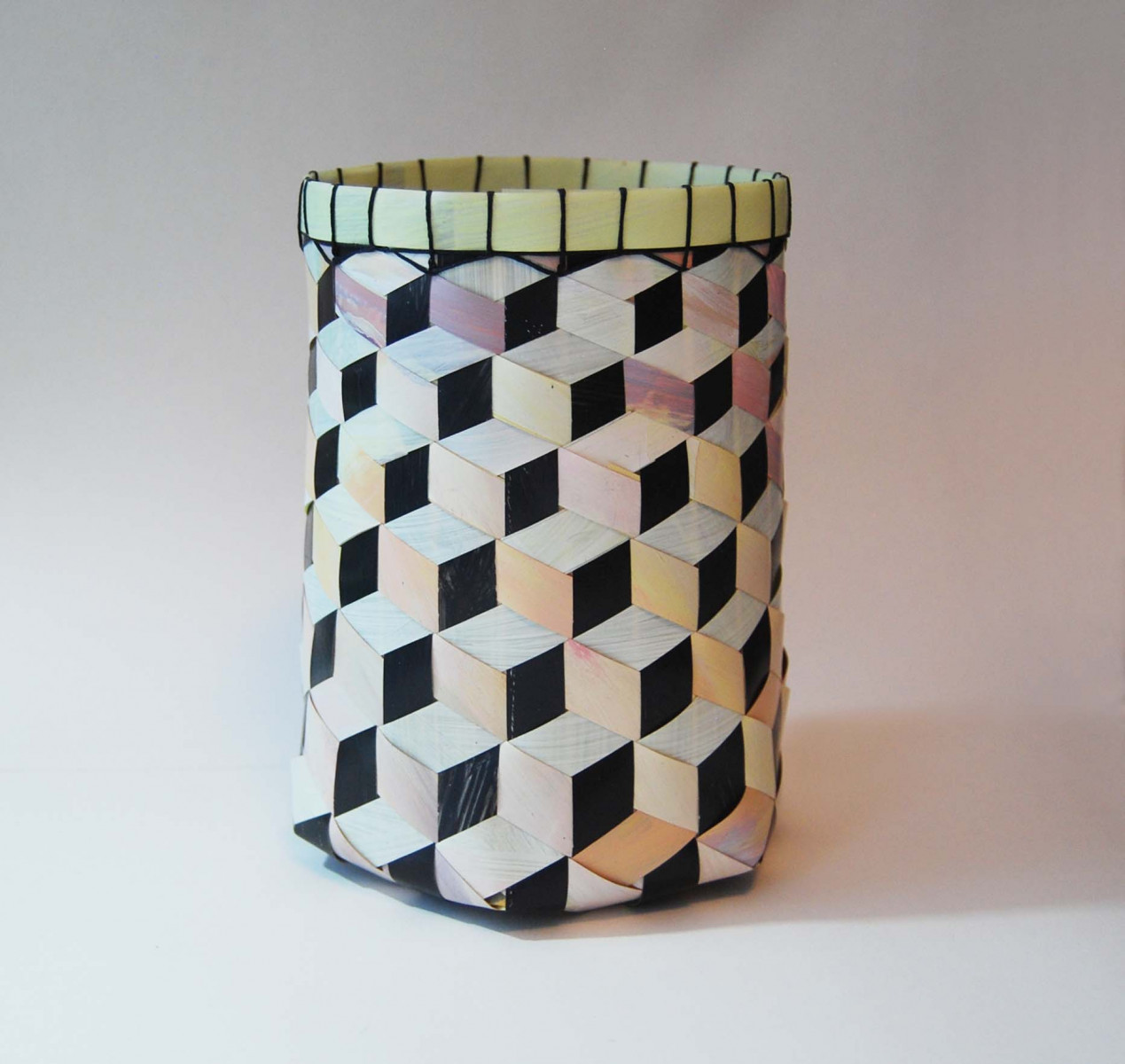
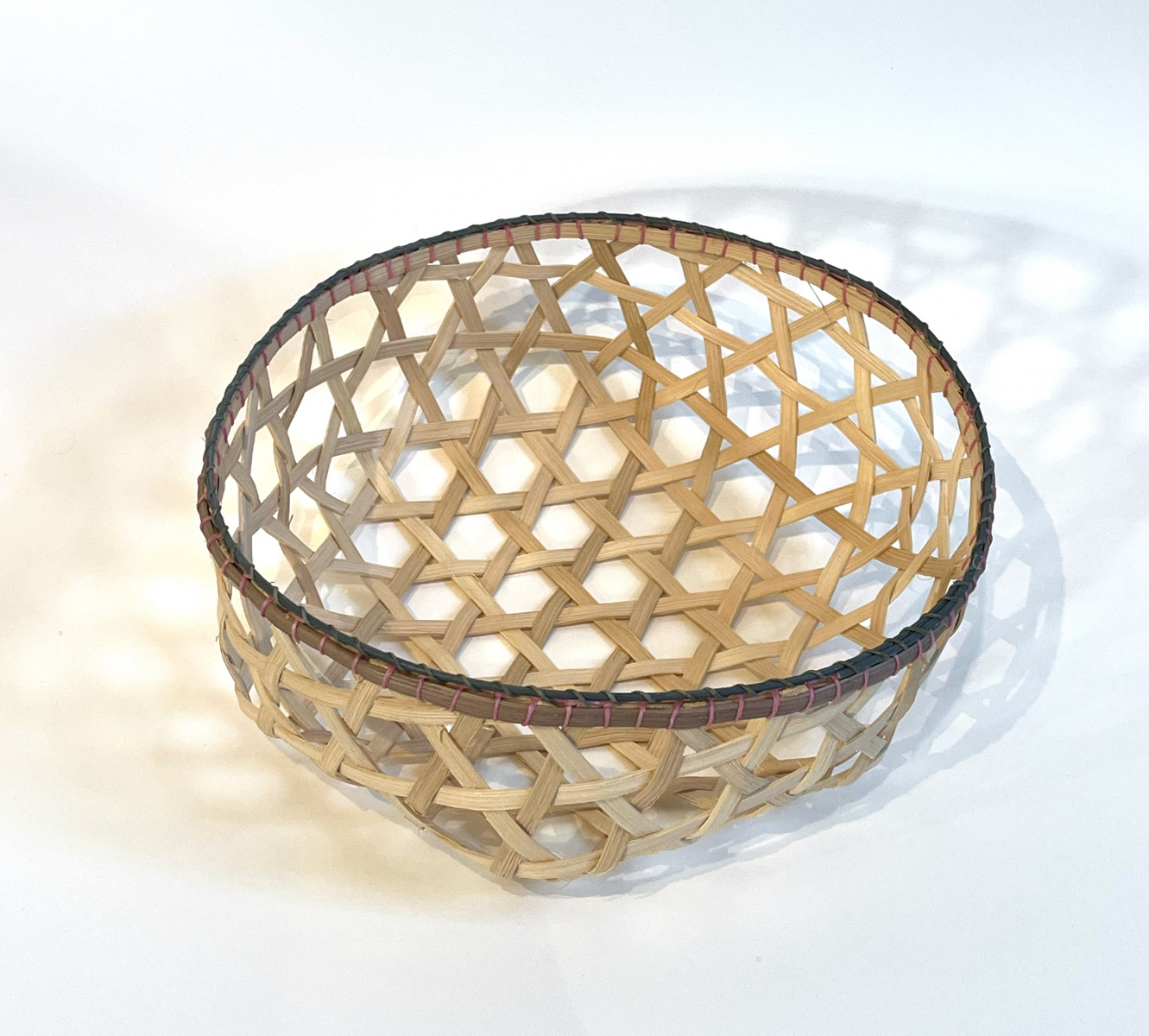
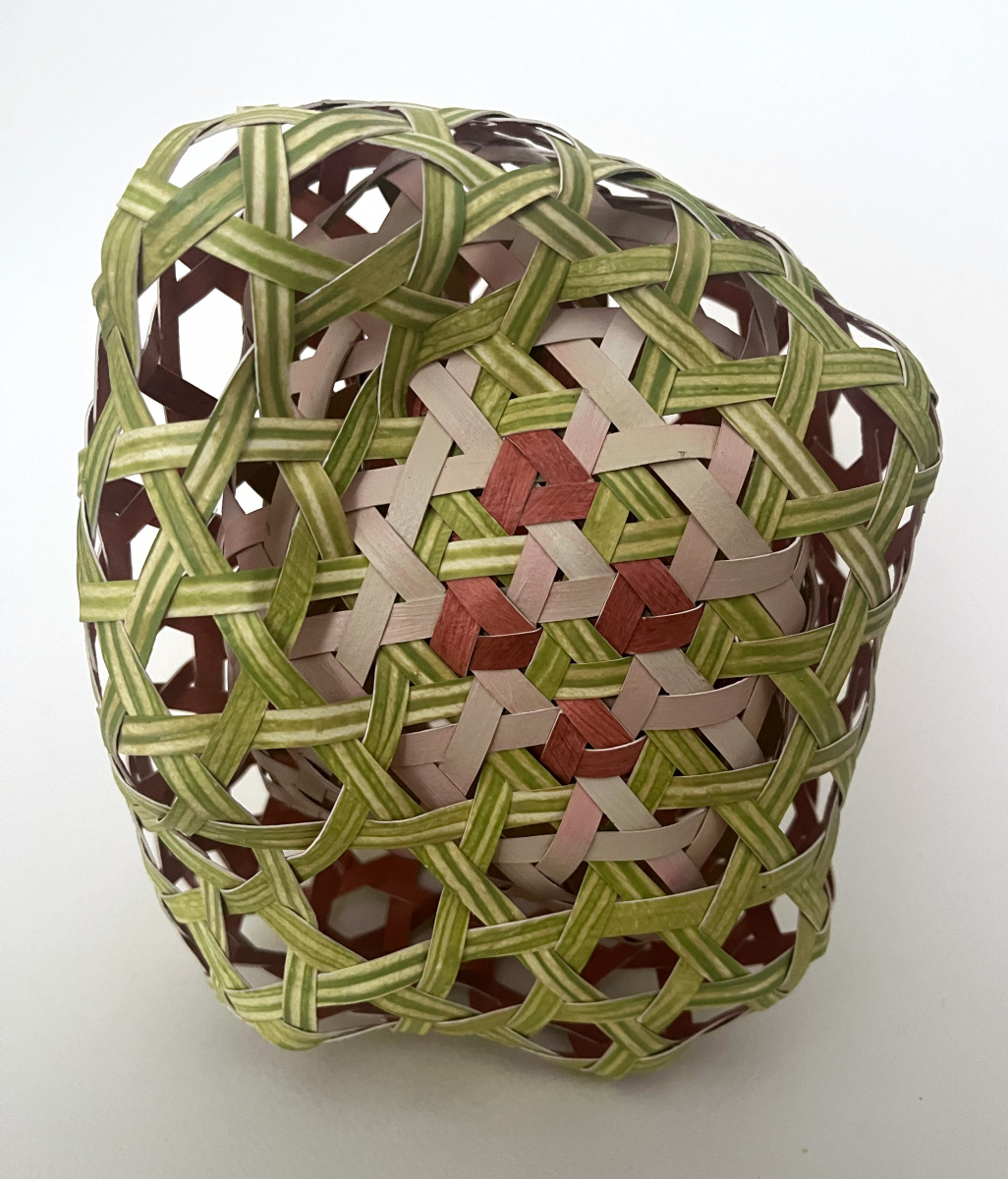
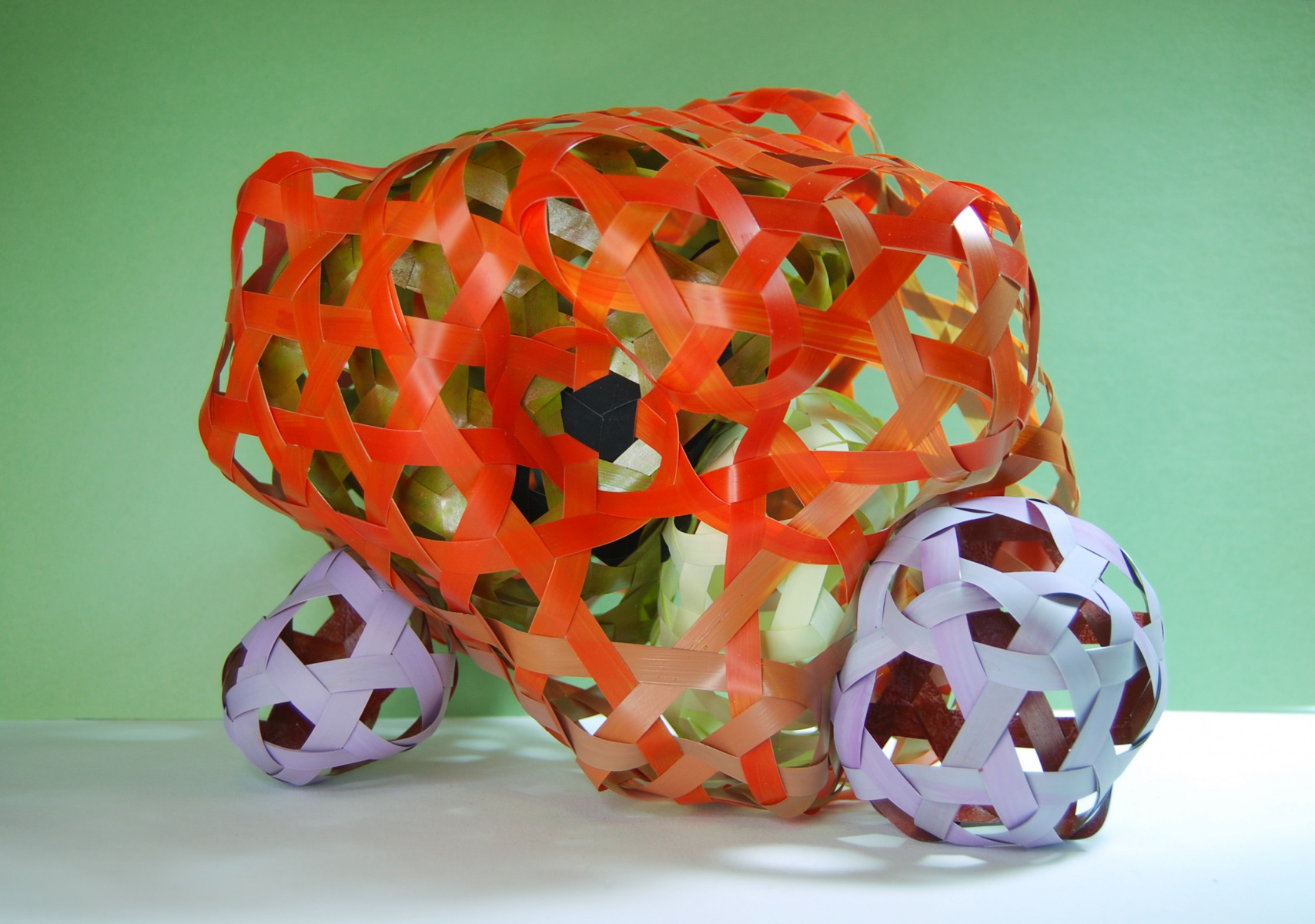
In this class, participants will explore the geometry of triaxial weaving with both rattan reed and painted polyester. Students will learn 2 different forms of triaxial weaving—the open hexagonal weave and the mad weave—and how these two types of weaves are connected. They will learn how to weave both of these types of weaves as a fabric and how to turn corners to create both functional baskets and sculptural forms. Students will leave having created 3-4 finished works, including several personal projects that explore techniques, materials and shapes. While not essential, an understanding of how to turn corners with plaiting will be helpful
In this workshop, students will learn:
- Weave both the open hex weave and mad weave as a flat fabric, and explore different color patterns (including stars, tumbling blocks, cells) that can be achieved with the mad weave.
- Learn how to turn corners to create 3-dimensional forms with open hex weave and mad weave, including 5-, 4-, and 7-sided corners, and understand how the corner logic functions the same in both types of weave. Students will be challenged to experiment with different types of corners and create a multi-corner demo piece that they can use later for reference.
- Learn 2 different techniques for how the open hex weave can function as a skeleton for the mad weave: weaving a star pattern into the open hex weave and overlapping 3 open hex weaves to form a cell pattern.
- Understand how to recognize common mistakes in the mad weave by becoming familiar with the patterns and rules of the weave. This will help students begin to build the mad weave out from the center rather than relying on the open hex weave as a skeleton.
- Create 3-4 finished works:
- One open hex weave vessel.
- One mad weave vessel.
- 1-2 personal projects that explore techniques, materials, or shapes of the students’ choices.
Materials Fee: $50
Materials included in materials fee:
- Flat reed
- Waxed linen, assorted colors
- PVA glue
- Japanese paper
- Acrylic matte medium
- Acrylic paint: red, yellow, blue, white, black
- Disposable cups & paper plates
- Paper towels
- Newsprint pad
Tools that will be provided for you:
- 5-gallon buckets
- Brayers
Tools you will need to bring:
- Self-healing cutting mat, at least 12 x 18 inches
- Matte Dura-Lar pad, 14″ x 17″ x .005″, 25 Sheets (make sure it is matte and not clear!!)
- Flat paint brush, at least 1 inch wide
- Palette knife
- Metal ruler, at least 18 inches
- Utility knife or ex-acto knife with extra blades – I recommend a locking utility knife like this
- 20 small toothless alligator clips – I recommend clips with a flat clamp like this
- Scissors
- Snips for cutting reed if you have a preferred tool other than scissors
- Pencil
- Tapestry needle
- Any long thin tool for poking between weavers such as a flathead screwdriver or micro-spatula
- Awl